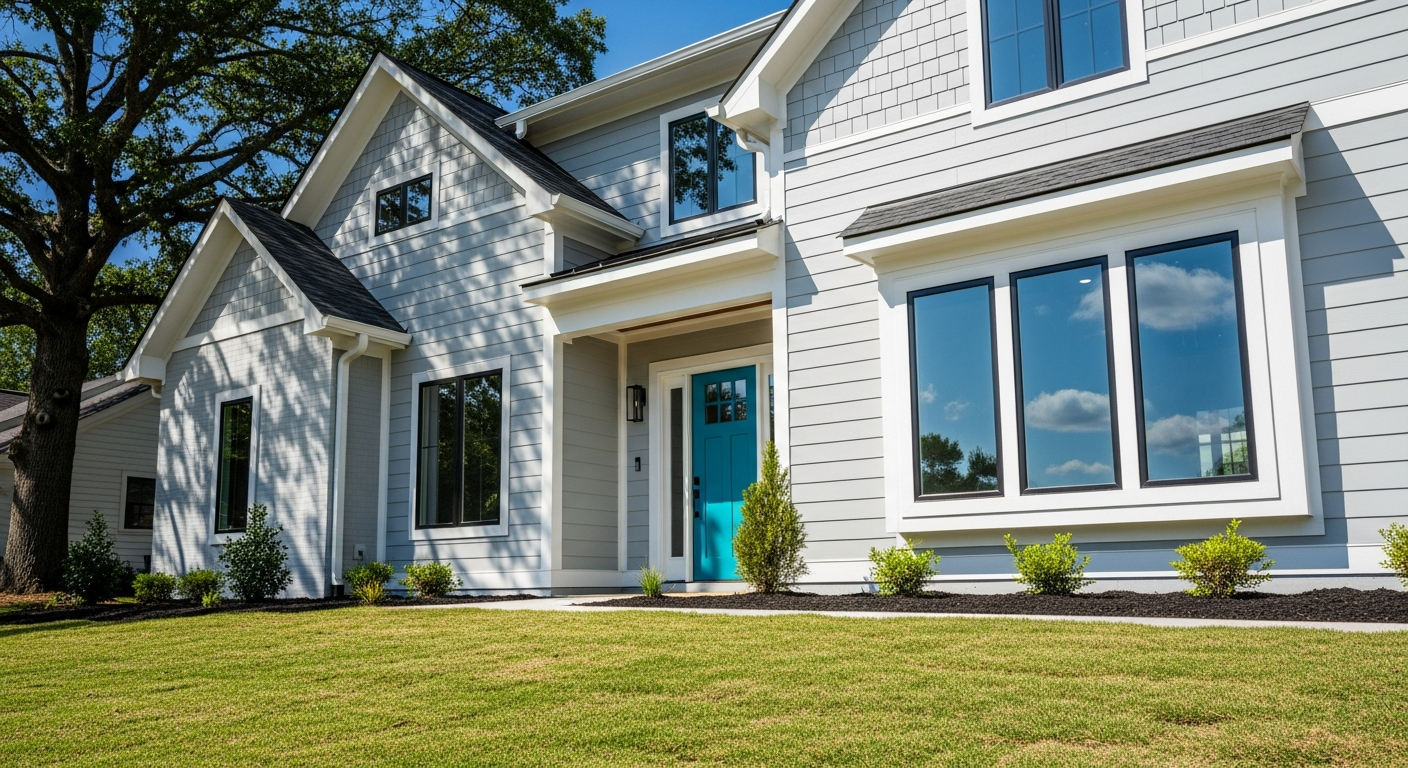
Drywall Repair and Patching in Greenville, SC — Texture Matched. Dust Contained. Invisible Results.
There is one thing worse than a hole in your wall — a patch you can see through the paint. We fix your walls so the damage disappears completely.
There is one thing worse than a hole in your wall — a patch you can see through the paint. Every time light hits it at an angle, the texture mismatch and the raised edge of the repair remind you that someone was there. In Greenville, Simpsonville, Taylors, and across the Upstate SC market, the most common drywall complaint is not the original damage — it is the repair that did not disappear. X Painters LLC is the crew that matches texture, contains the dust, and produces repairs that vanish under paint. We serve Greenville, Simpsonville, Greer, Mauldin, and Taylors with true professional repairs. Drywall repair is part of our complete residential painting and surface preparation services.
Drywall Repair Services We Provide Across Greenville, Simpsonville, Greer, Mauldin, and Taylors
We handle every type of wall and ceiling damage. Our services include:
- Hole and puncture repair (small nail holes through large access holes)
- Nail pop and fastener repair
- Stress crack repair (diagonal window and door corner cracks)
- Water-damaged drywall repair and stain sealing
- Drywall joint and seam repair (telegraphing and humping joints)
- Corner bead repair and replacement
- Popcorn ceiling scraping and smooth ceiling finishing
- Level 5 skim coating for smooth wall surfaces
- Texture matching (orange peel, knockdown, skip-trowel, slap-brush)
- Full drywall replacement on heavily damaged sections
- Pre-paint surface preparation and drywall priming
The Texture Matching Problem — Why Most Drywall Patches Stay Visible
Most drywall patches are visible for one of three reasons — and usually all three at once:
REASON 1 — THE TEXTURE WAS NOT MATCHED AT ALL:
The most common failure. A standard patch is applied, sanded flat, and painted — with no attempt to replicate the existing wall texture. The result is a smooth island surrounded by textured wall that is visible from across the room in any directional light.
REASON 2 — THE WRONG TEXTURE WAS APPLIED:
The applicator tried to match the texture but used the wrong tool, wrong pressure, wrong compound viscosity, or wrong technique for that specific texture type. An orange peel pattern applied at the wrong air pressure looks like knockdown. A skip-trowel pattern applied too evenly looks machine-made. Each texture type requires a different tool setup and a different hand — and matching someone else's original hand on a skip-trowel finish is a skill that takes significant practice.
REASON 3 — THE REPAIR WAS NOT PRIMED BEFORE PAINTING:
Even a perfectly matched texture will look different from the surrounding wall if the compound is not sealed with a PVA drywall primer before the topcoat goes on. Unprimed compound is porous and absorbs paint at a different rate than the surrounding painted wall — producing a flat, dead-looking patch in a wall with sheen. This is called flashing and it is the final step most people miss.
We match all four main texture types. Orange peel is a light, random spray pattern resembling the skin of an orange. Knockdown is a heavier random splatter knocked flat with a trowel before drying. Skip-trowel is hand-applied compound dragged across the surface in irregular patterns. Slap-brush is a stippled pattern applied with a brush or roller in a dabbing motion. These are common across different eras of Greenville, Simpsonville, Greer, Mauldin, and Taylors construction. We know how to match them all.
See the Difference: Invisible Repairs
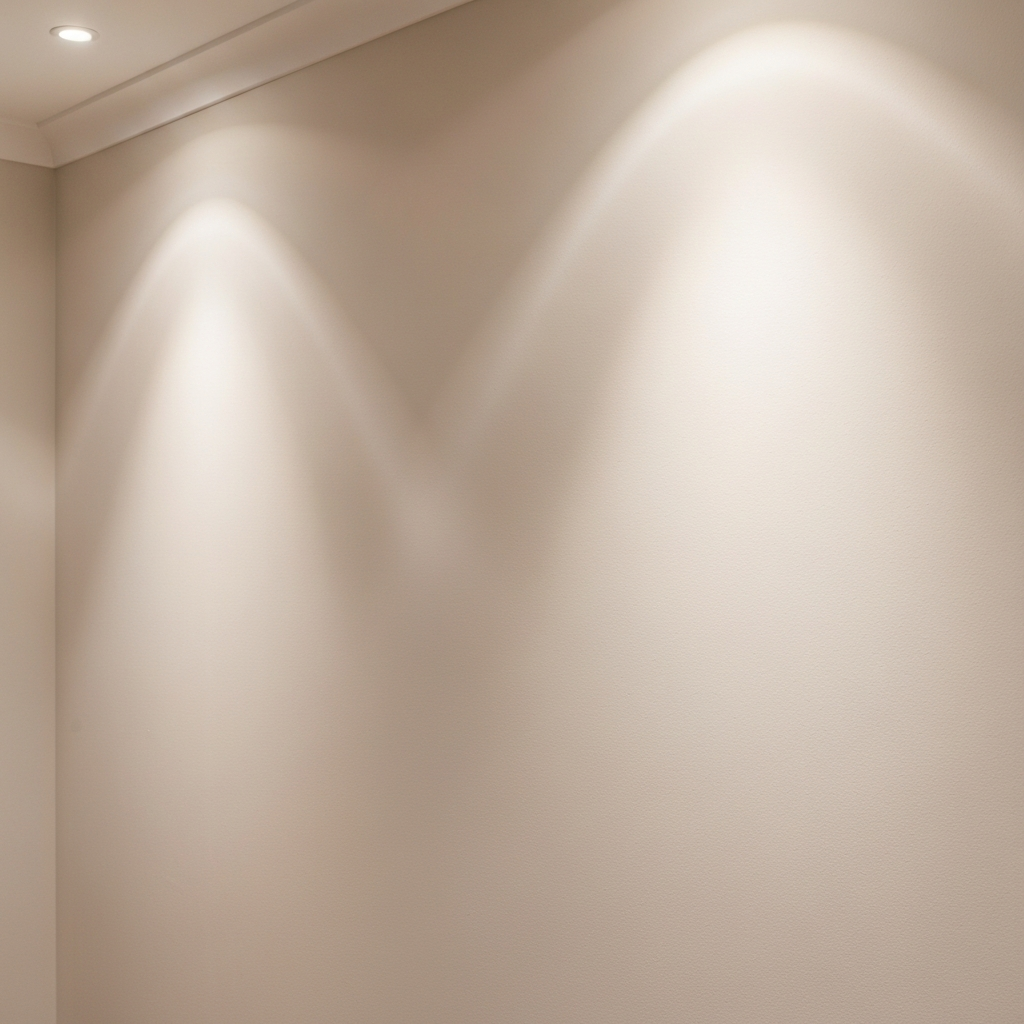
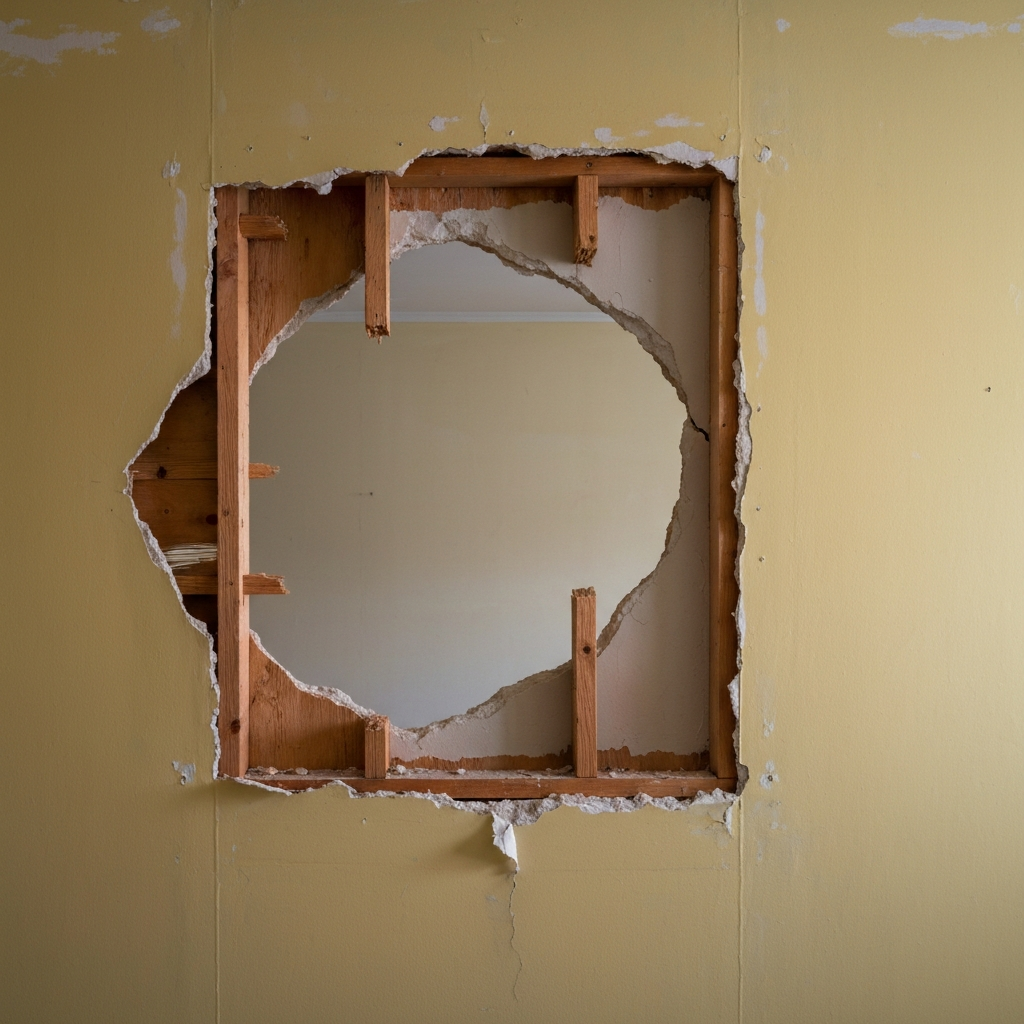
Our Drywall Repair Process — What Happens Before the Paint Goes On
- Damage assessment: We identify the repair type, the cause (stress crack vs. impact vs. water vs. settlement), and the correct repair approach for each.
- Containment setup: "I'm looking for someone who cleans up after themselves — the last guy left drywall dust all over my furniture." We hear you. We use plastic sheeting on floors and furniture. We seal the room to prevent dust migration to adjacent spaces.
- Structural repair: Damaged sections are cut back to solid drywall. Backing boards are installed. New drywall is patched and taped with fibered mesh tape. We use USG Durabond setting compound (hot mud) for the first structural fill.
- Finish coats: USG Sheetrock Plus 3 or National Gypsum Gold Bond lightweight finishing compound is applied in thin finish coats and feathered to zero over a wide span. Trim-Tex Architectural Beads are used for crisp outside corners.
- Dustless sanding: We use Festool Cleantec or Mirka HEPA extraction sanding between coats and for final surface prep. No dry drywall dust becomes airborne to settle across the room.
- Texture application: We match the surrounding wall using the correct technique for that specific texture type.
- Priming: We apply PVA drywall primer on all repaired areas before the topcoat. We use Zinsser BIN on any water-damaged areas before skim and prime.
- Optional paint: We can paint the repaired areas or the full room immediately after repair and prime. Visit our interior house painting page for the full scope.
Stress Cracks — The Drywall Problem Greenville Homes Get More Than Most
"There are cracks running diagonally from the corners of my windows and doors." This is common here. Upstate SC's expansive clay soil absorbs and releases moisture seasonally. This causes foundation movement that telegraphs as diagonal cracks from window and door corners. It happens more here than in regions with stable soil.
Hairline and diagonal stress cracks in drywall are almost always cosmetic. They are caused by seasonal movement, not foundation failure. We assess every crack and tell you honestly whether it is a drywall repair or a structural engineering conversation.
The correct repair uses stress crack V-groove routing with an oscillating tool. We fill the channel with an elastomeric bridging compound that moves with the structure. We use fibered mesh tape reinforcement, finish coats, and texture match. A standard filler-only repair on a stress crack will re-crack within one to two seasons. If the same crack has been repaired multiple times and keeps returning with greater width or displacement, that is a signal to have a structural engineer assess the foundation before repainting.
Water-Damaged Drywall Repair and Ceiling Stain Sealing in Greenville, SC
Water damage is a two-part problem. First, there is structural damage to the drywall (softness, sagging, delamination of the paper face). Second, staining compounds are left behind in the gypsum that bleed through paint.
We remove and replace any soft or structurally compromised drywall sections. Then, we apply water-damage ceiling stain sealing with pigmented shellac blocking (Zinsser BIN) to all stained surfaces before any compound or topcoat. This is non-negotiable.
"Every time we paint over the old water stain on the ceiling, a yellow ring bleeds back through." This happens because water damage deposits water-soluble mineral salts and surfactants into the drywall. Standard latex paint reactivates these compounds and carries them to the surface. Zinsser BIN shellac primer creates an alcohol-based, non-water-soluble barrier the leaching compounds cannot penetrate. We repair the drywall damage, but we always ask if the source of the water intrusion has been fixed first. Water-damaged drywall is common in Greenville and Simpsonville homes where HVAC condensate lines and roof penetrations leak.
Popcorn Ceiling Scraping and Smooth Ceiling Finishing in Greenville, SC
We provide high-reach popcorn ceiling scraping and texture removal. The process includes full floor and wall containment, wet-scraping the texture, skim coating to Level 5 smooth, priming, and flat ceiling coat application. Level 5 skim coating is the highest standard of drywall finishing — a thin compound skim coat applied over the entire surface to eliminate all texture variation.
Homes built before 1978 require asbestos testing before scraping begins. We require asbestos clearance testing on pre-1978 homes before any scraping. This is common in older Greenville, Taylors, and Greer homes. Doing this before furniture arrives is always smarter — no items to work around, easier containment, and a faster project.
What to Know About Drywall Repair Rules and Considerations in Greenville County, SC
Permits: Standard drywall patching and repair in Greenville County and the City of Greenville does not require a building permit for routine repairs. Filling holes, patching damaged sections, skim coating, and texture matching are maintenance activities. They fall outside the permit threshold under the SC Residential Building Code. If drywall repair accompanies structural work — replacing a load-bearing wall section or repairing fire-damaged framing — the structural scope may require a permit. [VERIFY current Greenville County thresholds before publishing]
Asbestos in Popcorn Ceilings: Pre-1978 popcorn ceilings may contain asbestos. SC law and EPA guidance require accredited testing before any scraping. We do not scrape untested ceilings on pre-1978 properties. We can refer homeowners to accredited asbestos testing resources in the Upstate SC area.
Lead Paint Considerations: If drywall repair involves sanding painted surfaces in a pre-1978 home, EPA RRP Lead-Safe protocols apply when more than 6 square feet of painted surface is disturbed. We follow EPA RRP guidelines on all applicable projects. [VERIFY EPA RRP certification status before publishing]
SC Contractor Licensing: Drywall repair contractors performing projects over $5,000 in South Carolina must hold a valid SC Contractor's License under SC LLR. We are fully licensed and insured. [VERIFY: insert SC license number]
Common Drywall Problems We Diagnose and Fix
"The drywall joints are showing bumps and lines through the paint."
Trade term: Joint photographing / telegraphing
This is caused by poorly feathered mud borders. The transition from compound to drywall paper was not blended wide enough. We fix this by re-skimming the joint with USG Sheetrock Plus 3 over a wider feather. A properly finished joint should be feathered out 8–12 inches on each side. We sand flat with Festool dustless extraction and prime with a PVA drywall primer before topcoat.
"Every time we paint over the old water stain on the ceiling, a yellow ring bleeds back through."
Trade term: Water-soluble surfactant leaching
Water damage deposits mineral salts that leach through latex paint indefinitely. We apply Zinsser BIN shellac-based primer directly to the stained surface before any compound or topcoat. Shellac creates a barrier the leaching compounds cannot penetrate. Latex alone never solves it.
"The old ceiling texture is flaking off and shedding dust everywhere."
Trade term: Un-primed popcorn matrix deterioration
The original acoustic spray texture was never sealed with a primer coat. The binder breaks down over time. We consolidate it with a penetrating primer if you are keeping the texture. If you want it removed, we wet-scrape and apply a Level 5 drywall skim coating. Pre-1978 homes require an asbestos test before scraping.
Our Standards
- Texture MatchingPatches that disappear completely.
- Dustless SandingFestool HEPA extraction keeps your home clean.
- Proper PrimingZinsser BIN seals water stains permanently.
Get Started Today
Request a Free EstimateDrywall Repair FAQs — Greenville Homeowners Ask Us These Every Week
Drywall Repair Service Areas — Greenville, Simpsonville, Greer, Mauldin, and Taylors, SC
Greenville, SC: Home base. The range of housing stock across Greenville — from 1920s plaster-wall craftsmen in North Main to 1990s drywall construction in newer subdivisions — means we work across every repair type. Stress cracks from Greenville's clay soil are the most common call in the historic neighborhoods; water-damaged ceilings from aging HVAC and plumbing are common across the mid-century housing stock.
Simpsonville, SC: Predominantly 2000s–2010s drywall construction with orange peel texture throughout. Nail pops, settlement cracks, and impact damage are the most common repair categories in Simpsonville's subdivision housing. HOA communities in Five Forks and surrounding areas expect clean, invisible repairs — visible patches on freshly listed homes are a direct hit to asking price.
Greer, SC: Mix of 1980s–1990s construction with knockdown and skip-trowel textures — both harder to match than orange peel and more common here than in newer Simpsonville builds. Stress cracks from seasonal soil movement are frequent across Greer's established neighborhoods.
Mauldin, SC: Growing market with both established homes needing repair work and new construction where Level 5 skim coating is increasingly requested for a smooth, contemporary wall finish. Rental unit turnover drywall repair is an active service category across Mauldin's growing rental housing stock.
Taylors, SC: Older housing stock — mid-century ranches with original drywall or plaster walls, and some of the most challenging texture matching work in the Upstate area. Slap-brush and skip-trowel textures from the 1970s and 1980s are common; matching them requires practice and the right compound viscosity. Popcorn ceiling removal is also a frequent request on Taylors properties being renovated or prepared for sale.
Get a Free Drywall Repair Estimate — We walk every wall and ceiling with you, identify every crack, hole, and water-damaged area, and give you a written quote with no surprises. Repairs that disappear. Dust that stays contained. Getting ready to paint after the repairs are done? We handle both in the same project — visit our interior house painting page to see how that works.